Does Glucosamine Actually Help Joint Pain?
Glucosamine is one of the most popular joint supplements on the shelf. Here's what the research actually says about whether it works, and what to know before you try it.
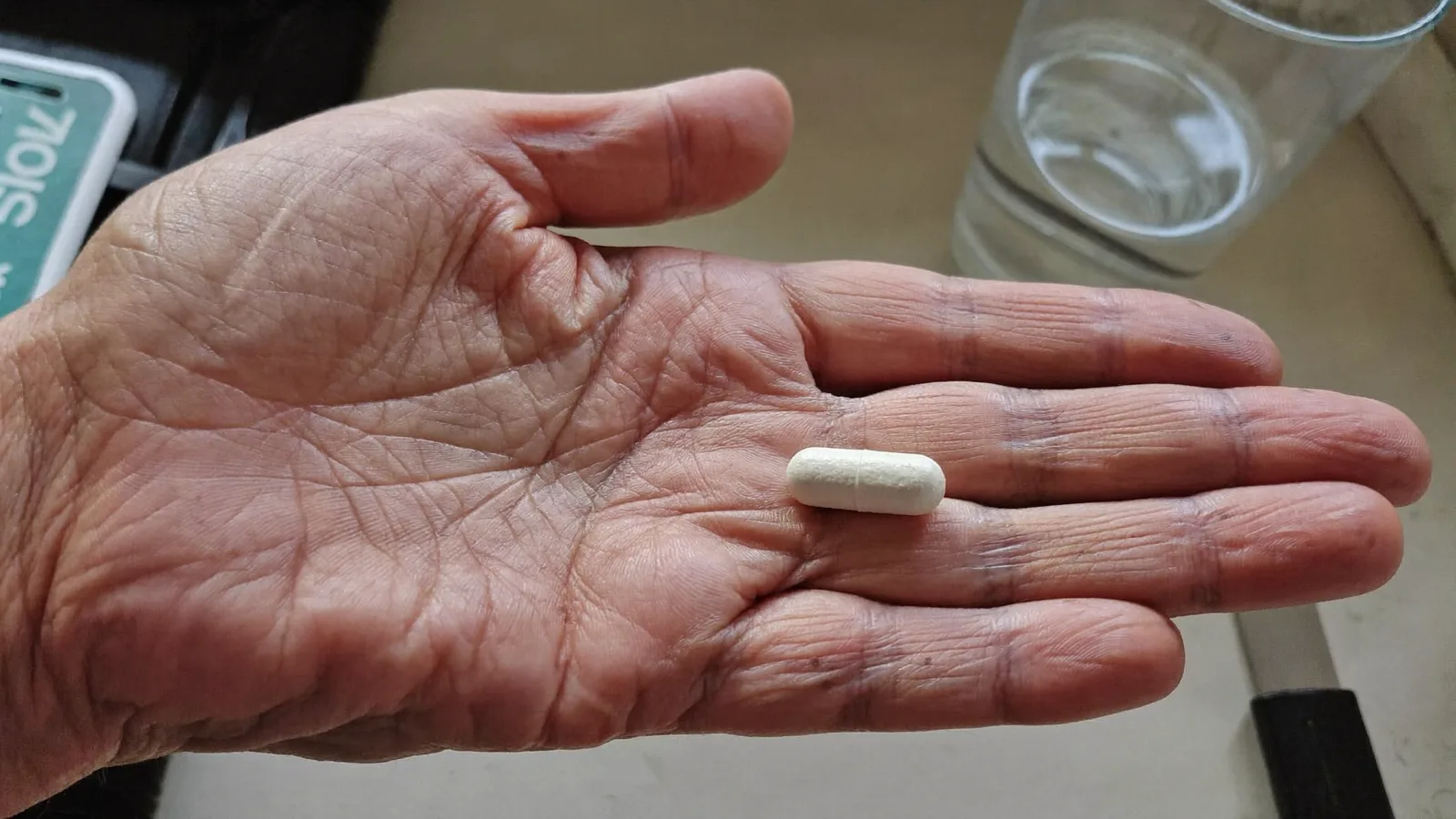
If your knees or hands have started talking back to you, there’s a good chance someone has already told you to try glucosamine. It’s one of the best-selling joint supplements out there. But does it actually do anything, or is it just an expensive habit? I dug into what the research actually shows, and the honest answer is: it’s complicated.
Key Takeaways
- Glucosamine taken alone has reduced pain in some studies, but not consistently across all of them.
- When combined with chondroitin, the research has not shown a clear benefit over a placebo.
- Major medical groups disagree. Some recommend against it. Others say it may help mild to moderate cases.
- It appears safe for most people, but it can affect blood sugar and interacts with blood thinners like warfarin.
What Glucosamine Is Supposed to Do
Glucosamine is a natural compound your body already makes. It’s a building block of the cartilage that cushions your joints. The theory behind the supplement is simple: if cartilage wears down as you age, maybe adding more glucosamine helps your body maintain or rebuild it.
It’s a reasonable idea. The problem is that a reasonable idea and a proven one aren’t the same thing, and the research on glucosamine has been messy for years.
What the Research Actually Shows
Here’s where it gets interesting. According to the National Center for Complementary and Integrative Health (NCCIH), part of the NIH, a combined analysis of 29 studies covering over 6,000 people with knee osteoarthritis found that glucosamine taken alone reduced pain significantly. So did chondroitin, taken alone. But when people took the two together, the combination didn’t outperform a placebo.
That split matters, because a lot of the popular joint supplements on store shelves combine glucosamine and chondroitin in one pill. If you’re one of the people taking a combo product hoping for pain relief, the current evidence doesn’t clearly back that up.
Even the medical groups disagree with each other. The American College of Rheumatology and the Arthritis Foundation came out strongly against using glucosamine for osteoarthritis in their 2019 guidelines. Meanwhile, the American Academy of Orthopaedic Surgeons takes a softer stance, listing it as something that “may be helpful” for mild to moderate knee pain, while admitting the evidence backing it up is inconsistent.
Translation: nobody has a clean answer. Some people genuinely seem to get relief. Others don’t. And researchers still can’t fully explain why.
Does It Actually Change Your Joints, or Just the Pain?
There’s a difference between a supplement that eases pain and one that changes what’s happening inside your joint. Two major two-year trials tried to answer that second question, and they landed in different places. One found that people taking glucosamine and chondroitin together had less narrowing of the joint space (a sign of cartilage loss) than people on a placebo. The other found no meaningful difference at all.
So if you were hoping for a clear “yes, it rebuilds cartilage” or “no, it doesn’t,” the honest answer is that we don’t have one yet.
Is It Safe to Take?
For most people, yes. The NCCIH reports that no major safety problems have turned up in large studies. That’s reassuring. But two things are worth flagging before you start:
- Blood sugar: Glucosamine may raise blood sugar levels in some people. If you have diabetes or prediabetes, mention it to your doctor before adding it to your routine.
- Blood thinners: Both glucosamine and chondroitin may increase bleeding risk in people taking warfarin. If you’re on any blood thinner, check with your doctor first.
Safety during pregnancy and breastfeeding hasn’t been established either way, so it’s best to skip it in that case unless your doctor says otherwise.
So Should You Try It?
If you’ve got mild to moderate joint pain and you and your doctor decide it’s worth a shot, glucosamine alone (not necessarily combined with chondroitin) has the better track record in the research. It’s not a guaranteed fix. It’s not going to work for everyone. But it’s also reasonably safe for most people, which is more than you can say for a lot of things people try for joint pain.
The most useful thing you can do is set expectations honestly. This isn’t a miracle supplement. It’s one option with real, if inconsistent, evidence behind it, and it’s worth a conversation with your doctor before you start, especially if you take other medications.
Does glucosamine interact with any medications?
Yes. The National Center for Complementary and Integrative Health notes that glucosamine and chondroitin may increase bleeding risk in people taking the blood thinner warfarin. If you take any blood thinner, talk to your doctor before starting glucosamine.
Does glucosamine rebuild cartilage?
The evidence is mixed. Two major two-year trials looked at joint structure, not just pain, and got conflicting results. One found less joint space narrowing with glucosamine and chondroitin combined. The other found no difference compared to a placebo. There's no settled answer yet.
Is glucosamine safe to take every day?
According to the NCCIH, no major safety problems have shown up in large studies. Two things worth knowing: it may raise blood sugar in some people, and safety during pregnancy or breastfeeding hasn't been established. If either applies to you, check with your doctor first.
Sources
Medical Disclaimer
This article is for informational purposes only and is not a substitute for professional medical advice, diagnosis, or treatment. Always seek the advice of your physician or another qualified health provider with any questions you may have regarding a medical condition. Never disregard professional medical advice or delay seeking it because of something you read here. See our full medical disclaimer.

About Mara Voss
Mara writes HealthInfoDaily's joint and mobility coverage. She reads the actual studies, not just the press release about them, and tells you plainly what they do and don't support.
Read full bio →Related Reading

Hip Joint Pain: Common Causes and When It's Worth Seeing a Doctor
Hip pain can come from arthritis, a strained muscle, or something more urgent. Here's how to tell the difference and when it's time to call a doctor.
Read more →
Why Your Joints Feel Stiffer in the Morning
That creaky, stiff feeling when you first get out of bed is common, but the cause (and how long it lasts) can tell you a lot. Here's what's actually going on.
Read more →Bariatric Vitamins: What You Actually Need After Gastric Sleeve or Bypass
What bariatric surgery does to nutrient absorption, why standard multivitamins fall short afterward, and exactly what a bariatric-specific routine needs to cover.
Read more →